
2 flights · one location
Bishop Loch
A shallow, nutrient-rich loch on Glasgow’s north-eastern edge, Bishop Loch is part of the Seven Lochs Wetland Park. Its open water, reedbeds, marsh, grassland and woodland make it an unusually varied pocket of wetland habitat beside Easterhouse.
- Latitude
- 55.87710° N
- Longitude
- 4.09860° W
About the location
The place itself
Bishop Loch lies on the north-eastern edge of Glasgow, immediately north-east of Easterhouse and close to the boundary with North Lanarkshire. Although surrounded by the wider urban area, it has the character of a low-lying wetland landscape: open water gives way to reedbeds, marsh, rough grassland and woodland around the margins.
The loch is part of the Seven Lochs Wetland Park, a large cross-boundary nature park linking greenspaces between Glasgow, Stepps and Coatbridge. Bishop Loch itself is a Site of Special Scientific Interest, while the adjacent Bishop Loch Local Nature Reserve covers land around the south-western side rather than the open water. It is a useful distinction, as the name is often used for both the loch and the wider reserve.
A loch shaped by ice and water
Bishop Loch occupies a hollow formed during the last Ice Age. It is shallow and naturally nutrient-rich, a type of water body that can support extensive vegetation along its shores. Its margins are especially important: there is a gradual transition from aquatic plants and reed swamp into fen, marsh, grassland and woodland. That variety of habitats within a fairly compact area is the main reason for the site’s ecological importance.
Reeds and other emergent plants dominate much of the edge, but the loch also supports more specialised flora. NatureScot records nationally scarce slender-leaved pondweed and tufted loosestrife here, alongside plants such as ivy-leaved duckweed and bulrush. The dense wetland cover can make the water feel more enclosed than its size suggests, particularly where reedbeds have advanced from the shore.
Birdlife and the wider wetland
The reedbeds and open water support a diverse breeding bird community. Water rail and grasshopper warbler have been recorded, and the site is known for a large swallow roost. The loch also has a notable freshwater invertebrate interest, including the nationally scarce water beetle Agabus unguicularis. As with any wetland, what is visible changes with season, water levels and vegetation growth.
Older traces in the landscape
Bishop Loch has a longer human history than its quiet margins might suggest. Submerged remains of crannogs are known in the north-east of the loch. On the south side, archaeological records associate a mound and buried foundations with a medieval residence of the Bishops of Glasgow, often called Bishop’s House or Bishop’s Palace. The exact interpretation and extent of that site have been debated over time, but it helps explain the loch’s name and gives the surrounding ground an added historical layer.
Today, Bishop Loch remains an example of how much wetland habitat can persist at the edge of a major city. Its value lies less in a single viewpoint than in the mixture of water, reeds, scrub and open ground that connects it to the broader Seven Lochs landscape.
Flight log
Different days, different views
I come back when the season, weather or mood changes. Each entry keeps that day's photos and notes together.
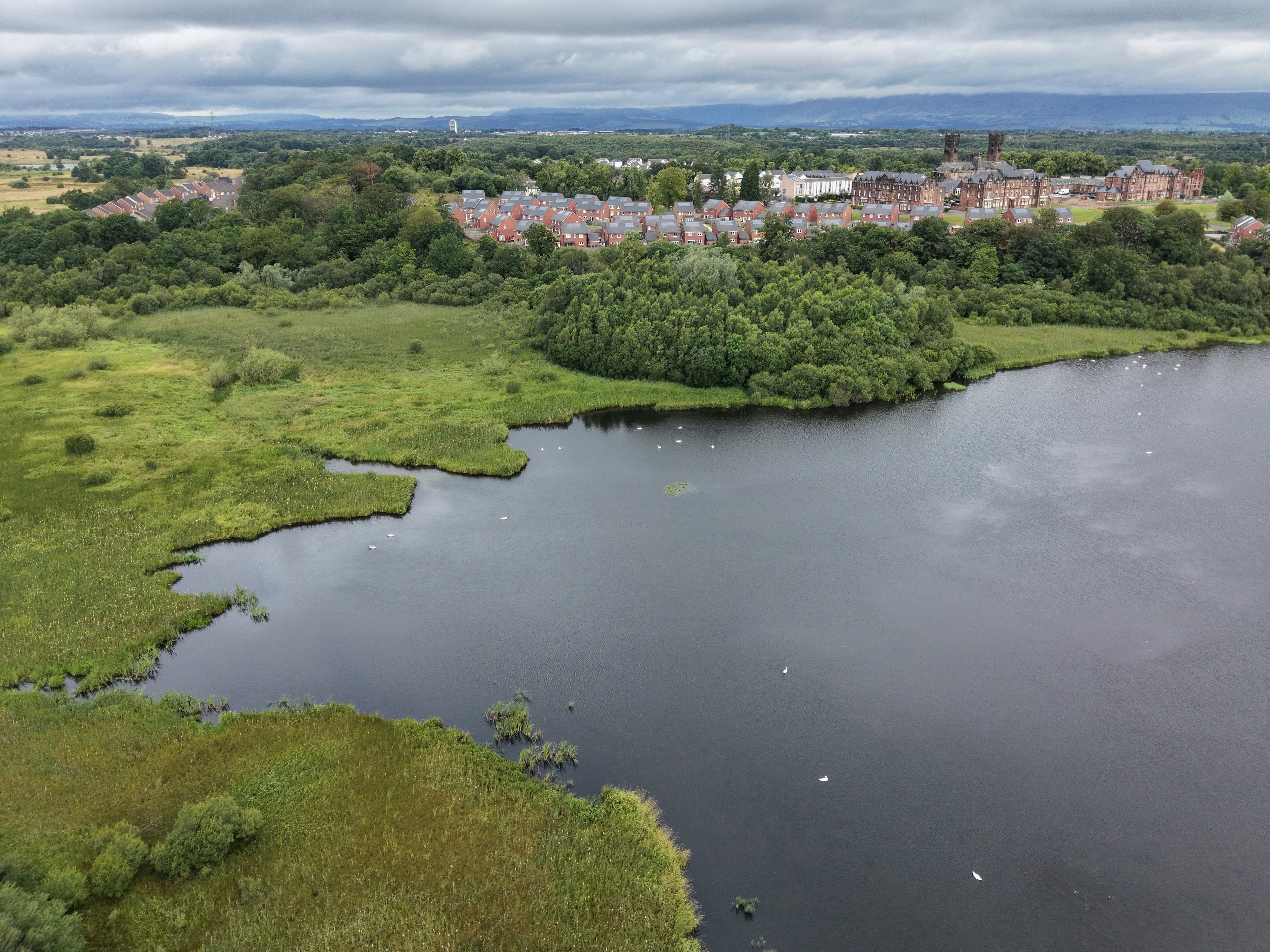
Summer · 29 July 2026
Bishop Loch and Gartloch Ruins
A cloudy summer-morning flight over Bishop Loch, with a little wind to contend with. I also captured the ruins of the nearby former Gartloch Hospital — a subject that may merit a video of its own later on.
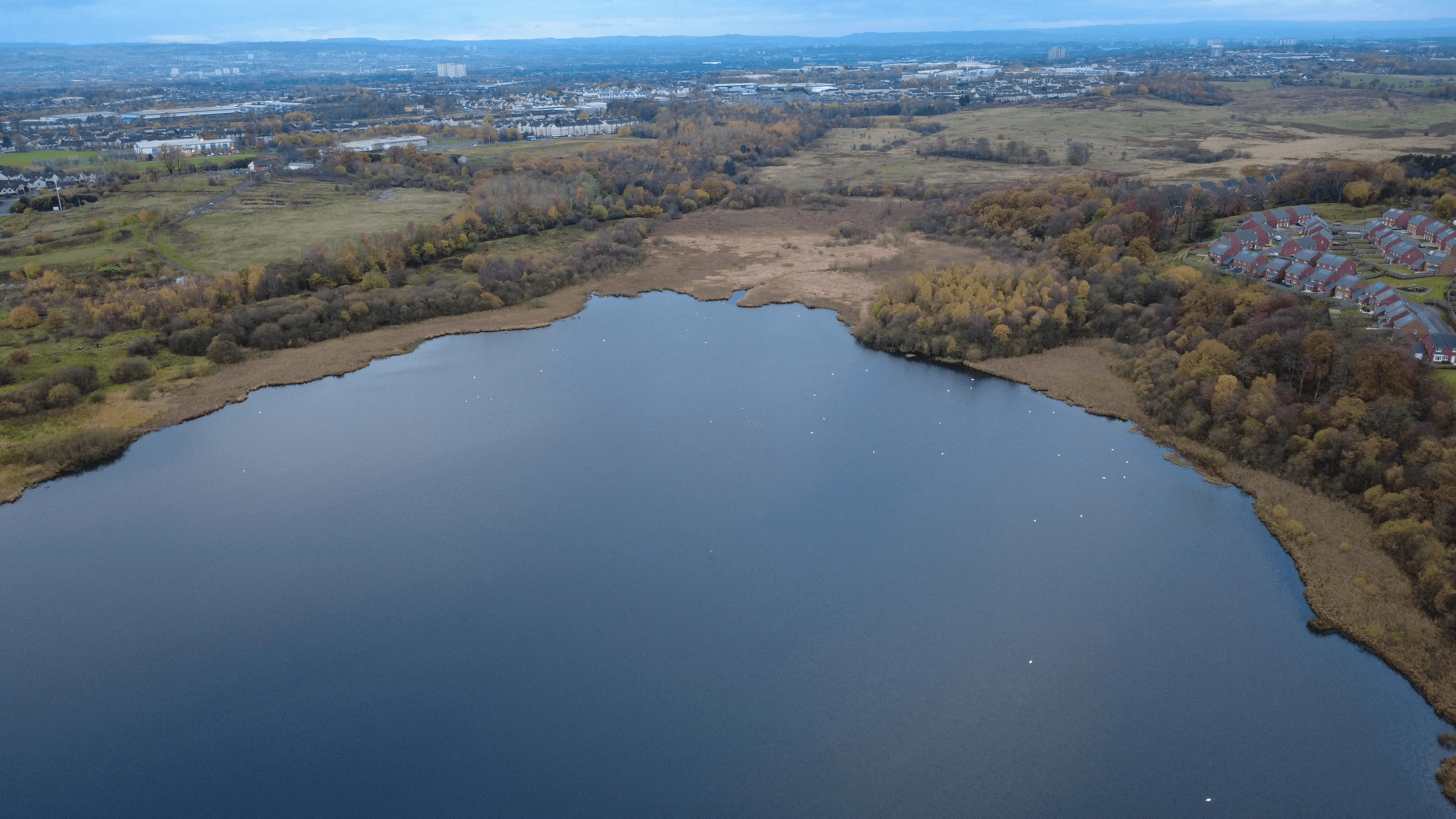
Autumn · 7 November 2025
First Water Flight at Bishop Loch
A relaxed November flight at Bishop Loch on a partly cloudy autumn day, while I was still very new to drones and probably taking one over water for the first time.
Location
Roughly where it is
General area
Bishop Loch
55.87710° N · 4.09860° W
The marker shows the general location only, not a take-off point.
Open in Google Maps