

A place I flew
New Lanark
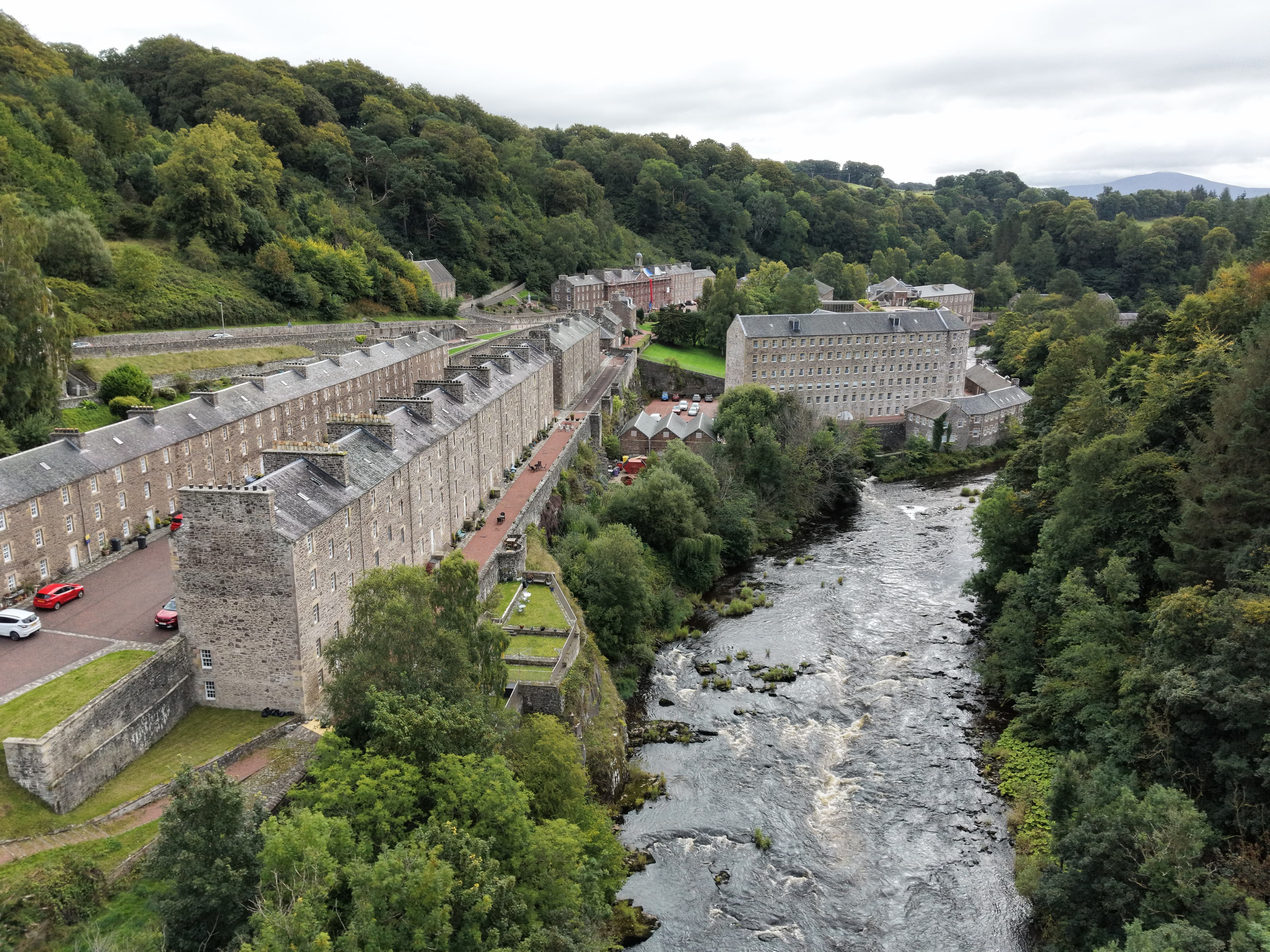
New Lanark is an exceptionally well-preserved former cotton-mill village on the River Clyde, just south of Lanark. Its mills, workers’ housing and public buildings make the workings of an early industrial community unusually easy to read in the landscape.
- Latitude
- 55.66333° N
- Longitude
- 3.78306° W
About the location
The place itself
New Lanark is a planned former cotton-mill village on the River Clyde, immediately south of Lanark in South Lanarkshire. The village occupies a narrow part of the Clyde valley where the river, steep wooded slopes and substantial industrial buildings sit closely together. It remains a residential place as well as a major historic site, so it feels more like a village with a remarkable past than a collection of isolated monuments.
River, power and layout
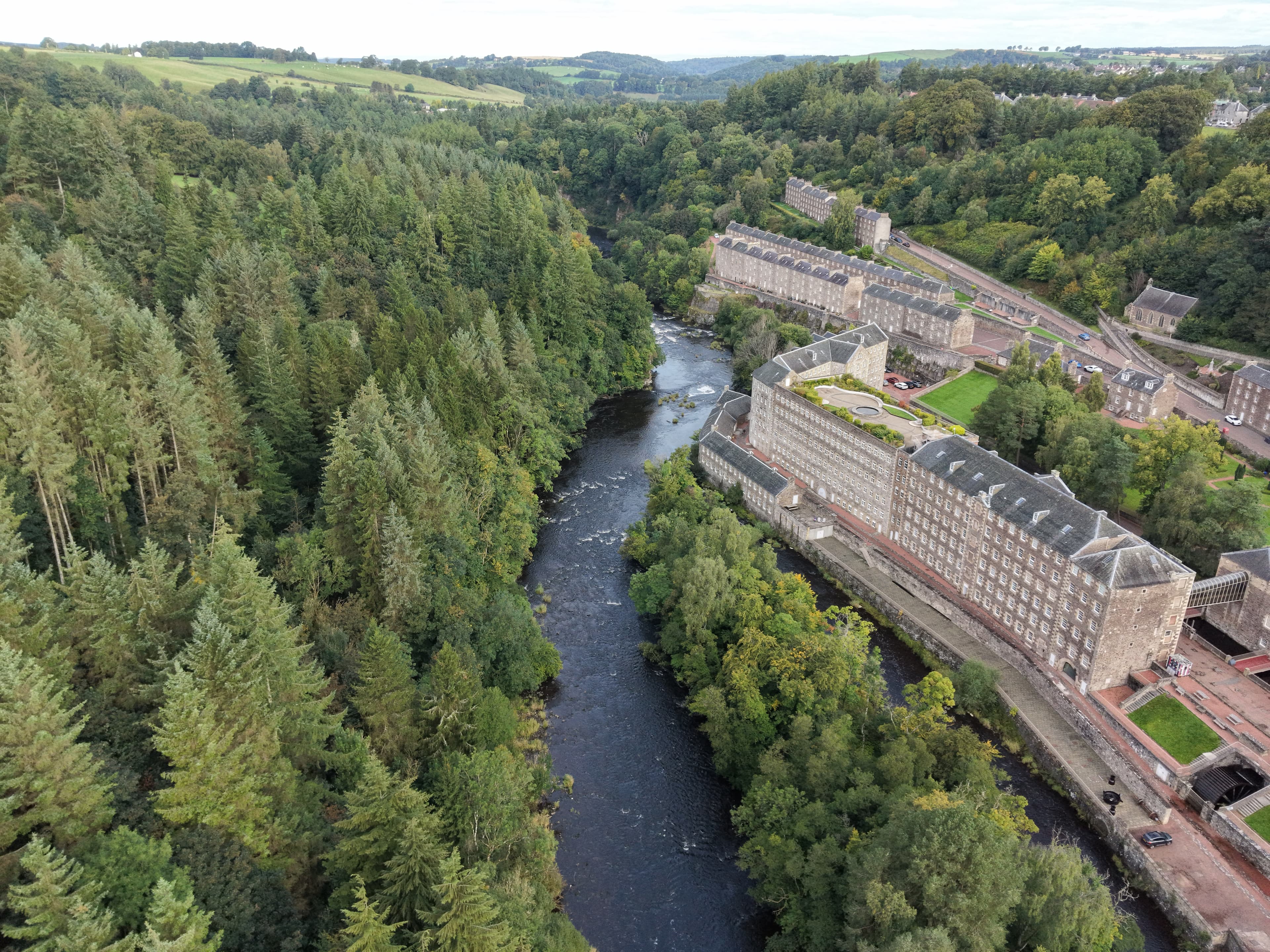
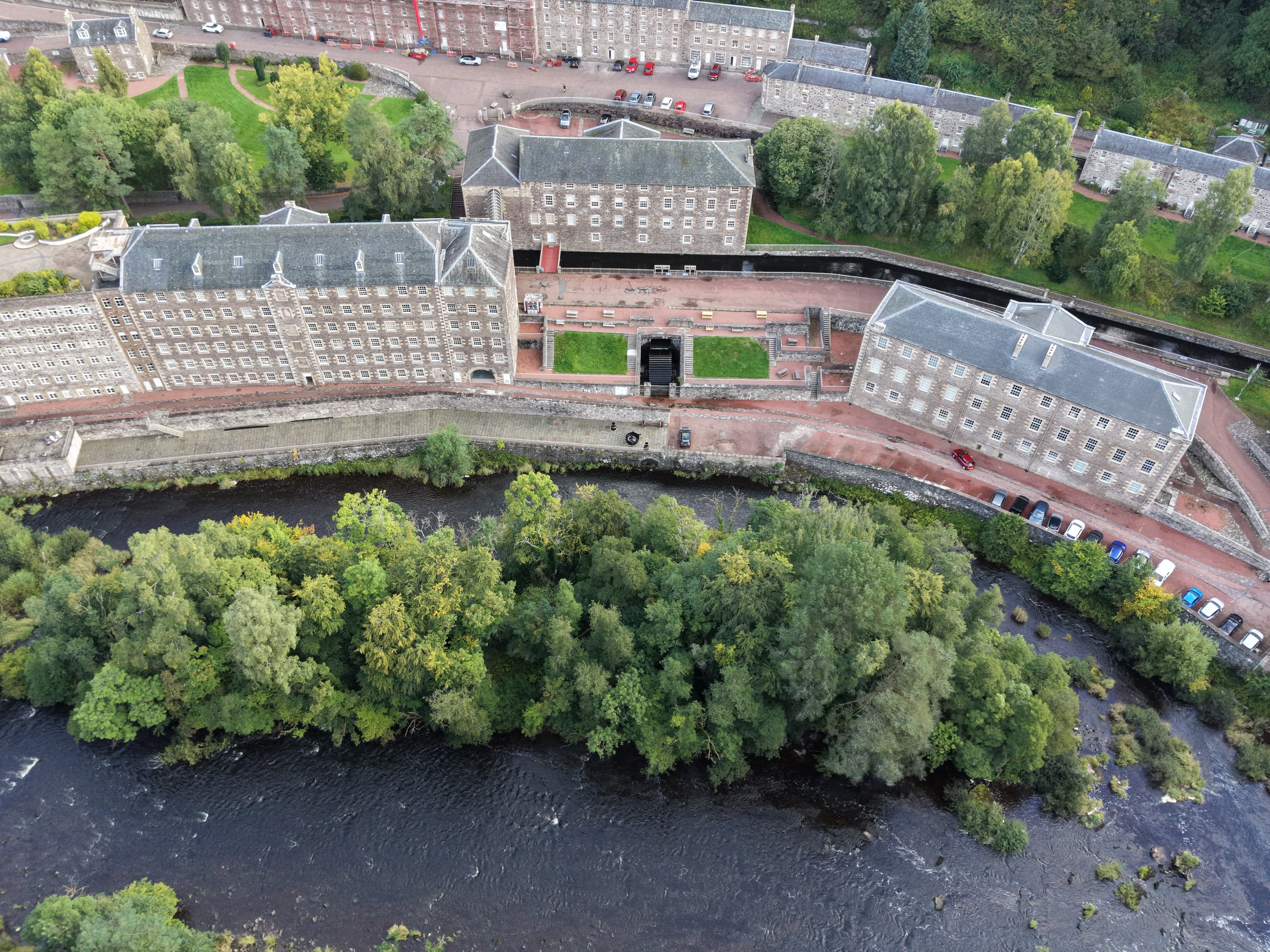
The Clyde was the reason New Lanark was built here. From the beginning, water was diverted through a weir, tunnel and lade to power the mills. These engineered features still help explain the village’s layout: the large mill blocks stand close to the river, while housing and communal buildings rise on the ground beside and above them. The water-management system is an important reminder that this was a carefully organised manufacturing settlement, not simply a mill built beside a convenient stream.
The river remains the strongest natural element in the scene. Its course gives the village a clear edge, while the surrounding valley woodland softens the scale of the mills and tenement rows. The combination of river engineering, industry and mature woodland is central to the character of the place.
A model industrial community
David Dale and Richard Arkwright founded New Lanark in 1785, and cotton production began the following year. By the end of the eighteenth century it had become one of Scotland’s largest cotton-spinning concerns. The surviving village still shows the different parts needed to support such a large workforce: mills, long rows of workers’ homes, managers’ houses, shops and shared public buildings.
Robert Owen became involved in the management from 1799 and developed New Lanark into the best-known expression of his ideas about education, welfare and the organisation of working life. His influence is particularly visible in the Institute for the Formation of Character and the School for Children, as well as in the relatively generous scale and planned arrangement of the housing. These reforms were influential, though they existed within the demanding realities of an early factory community.
Why it matters now
Cotton manufacture continued here until 1968. The village’s subsequent restoration has retained an unusually complete group of industrial, domestic and community buildings from its main period of development. New Lanark was inscribed as a UNESCO World Heritage Site in 2001 because it illustrates both the growth of the factory system and the early attempt to link industrial production with social reform.
For a lasting view of the site, it is worth treating the village and river as one connected landscape. The mills make sense because of the Clyde’s power; the housing and public buildings make sense because thousands of people once lived and worked around that power source.
Autumn · 9 September 2026
New Lanark Before the Crowds
An early visit to New Lanark on 9 September 2026, concentrating on views of the wheel, garden roof and the River Clyde before most visitors arrived.
Notes from this flight
9 September 2026
I went to New Lanark early for this flight, before most of the visitors arrived. That gave me a quieter time to focus on the views I had come for.
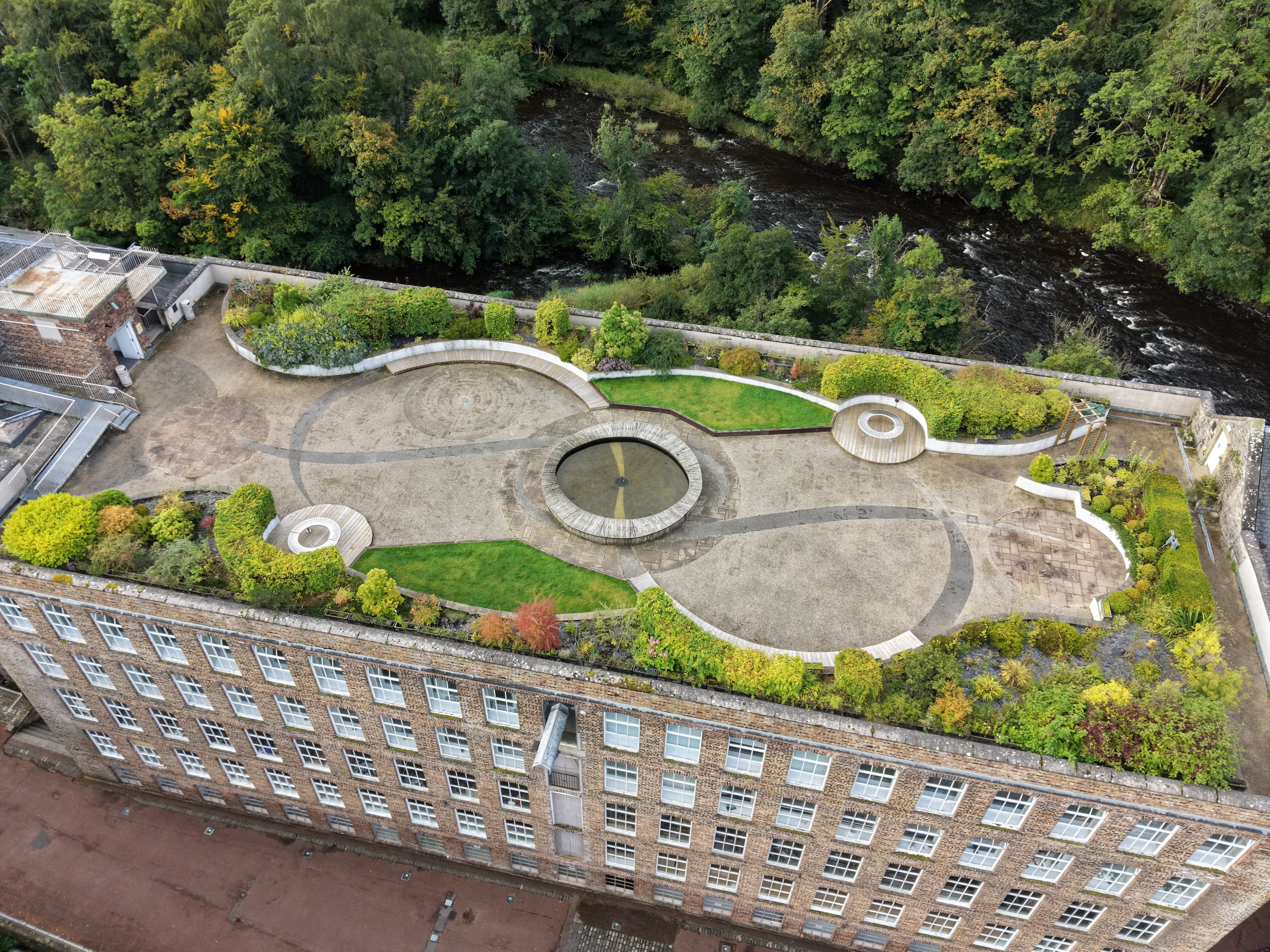
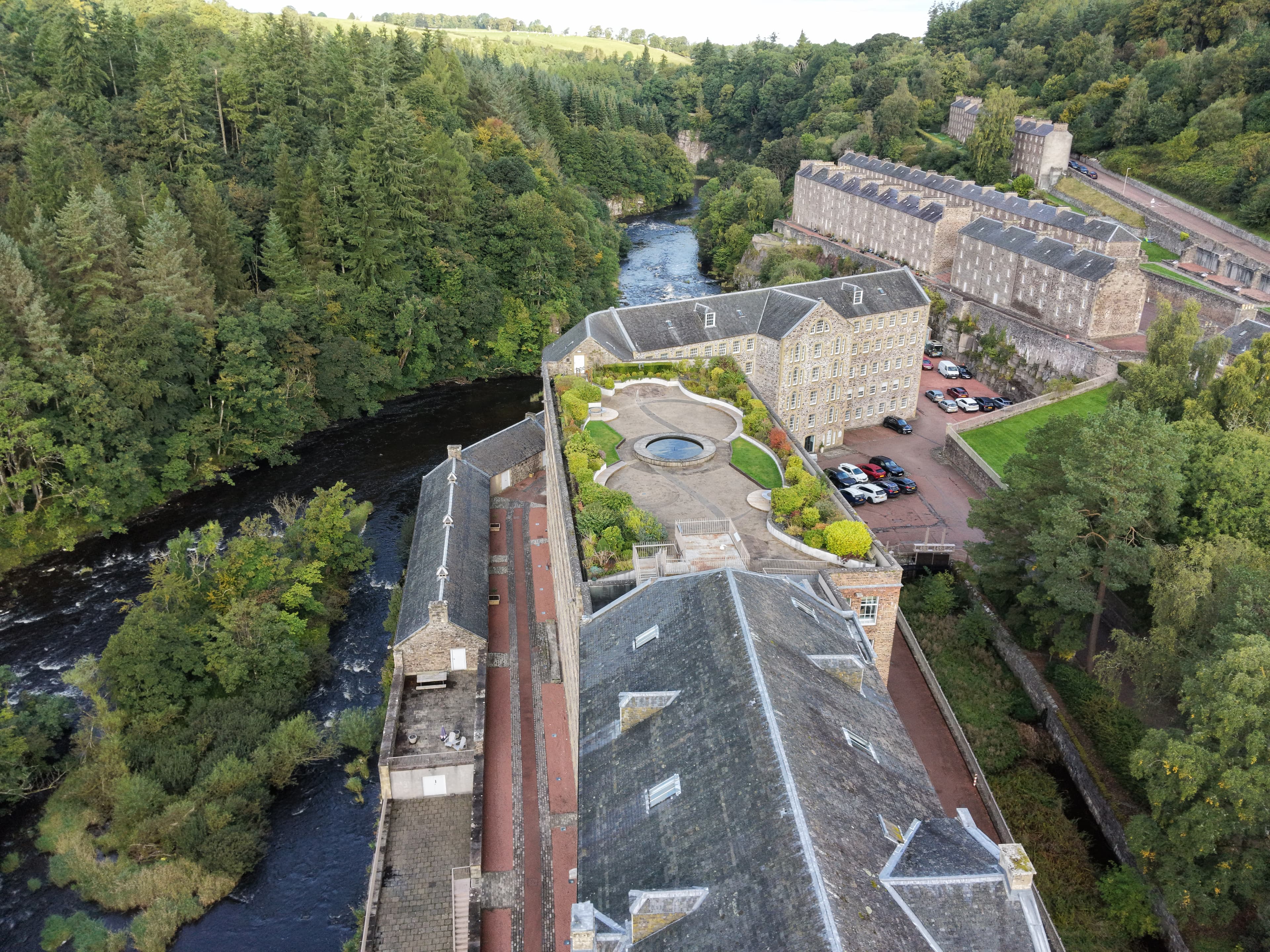
The plan was to capture New Lanark from above, including the wheel, the garden roof and the River Clyde as it runs around the village. Those were the main details I wanted to bring together in the footage.
New Lanark is a former eighteenth-century cotton mill village on the River Clyde and has been a UNESCO World Heritage Site since 2001. From above, the relationship between the old mill buildings, the water-powered features and the river is especially clear.
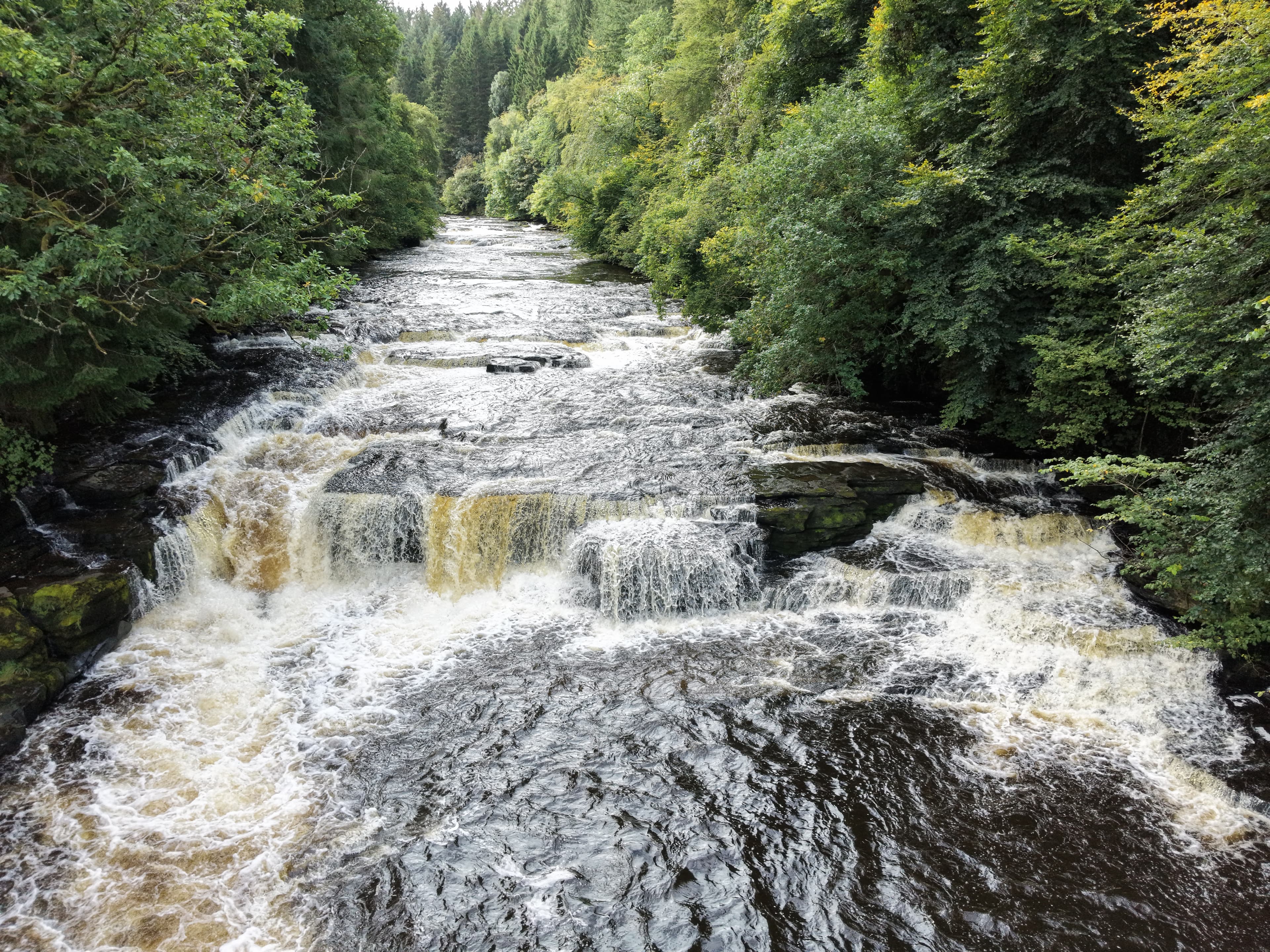
I did not go as far as the Falls of Clyde on this occasion, but that could make a separate video another time. For this visit, it was good simply to spend some quiet time flying around New Lanark and concentrating on the village itself.
Look around
The flight in 360°
An interactive view from this visit. Click to load it, then drag around the scene.
New Lanark 001 0051 Pano
Gallery
Photos from this flight
Location
Roughly where it is
General area
New Lanark
55.66333° N · 3.78306° W
The marker shows the general location only, not a take-off point.
Open in Google Maps