
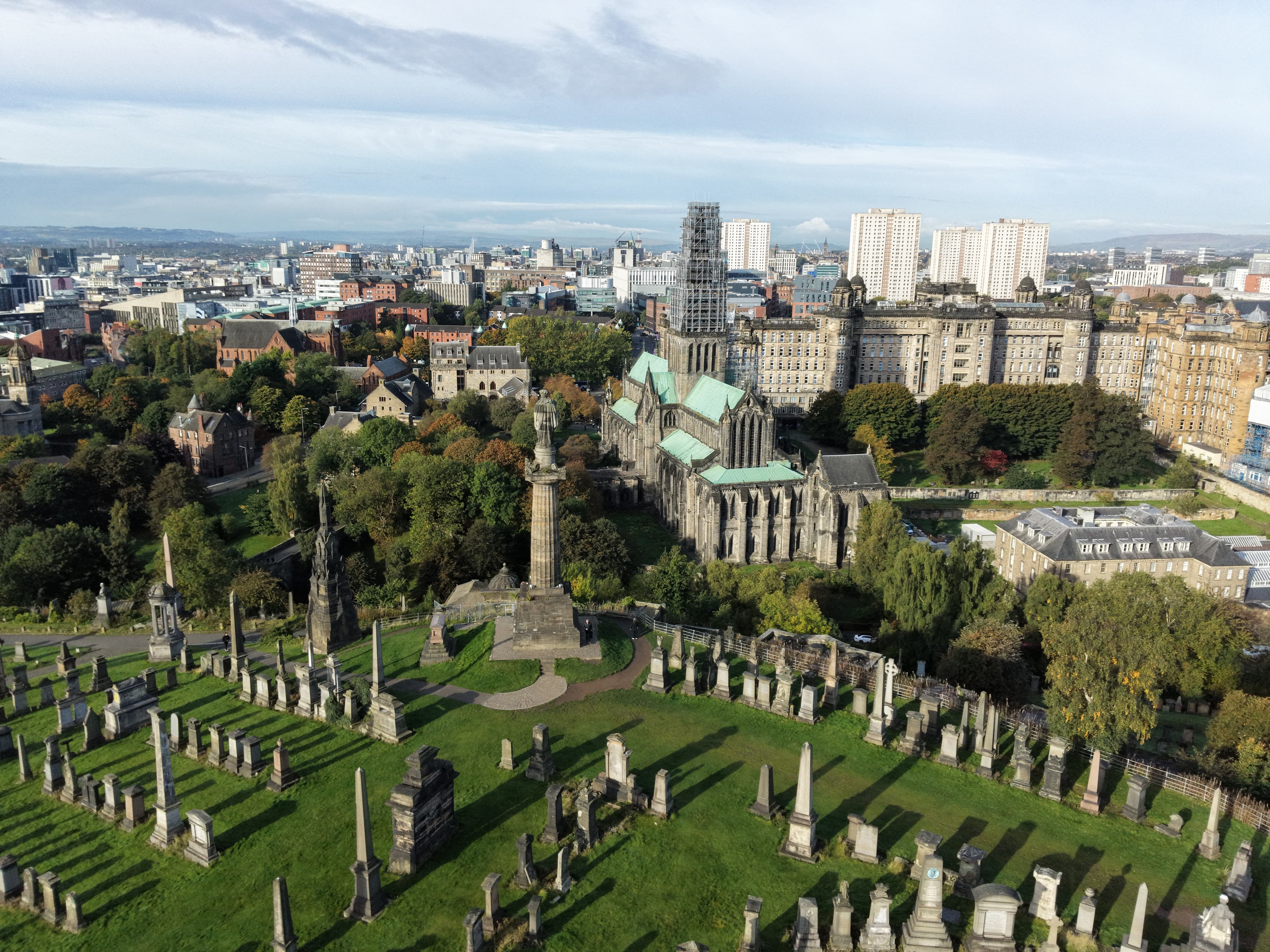
A place I flew
Glasgow Necropolis
A large Victorian garden cemetery on the hill above Glasgow Cathedral, Glasgow Necropolis is a striking record of the city’s nineteenth-century civic, commercial and social history. Its terraced paths, mature trees and densely varied monuments make it a distinctive part of the city centre skyline.
- Latitude
- 55.86287° N
- Longitude
- 4.23085° W
About the location
The place itself
Glasgow Necropolis is a large nineteenth-century cemetery on the steep hill immediately east of Glasgow Cathedral, close to the northern edge of the city centre. Its prominent setting, above the old course of the Molendinar Burn and beside the Cathedral precinct, means that its monuments remain an unusually recognisable part of Glasgow’s skyline.
The ground was formerly part of Fir Park, land owned by the Merchants’ House of Glasgow. It had been used as a pleasure ground before plans for a new burial place were agreed in 1828. The Necropolis was intended as an interdenominational cemetery, a significant departure from the older pattern of burial centred on parish churchyards. Its first burial took place in 1832 and the cemetery opened formally in 1833.
A Victorian city of the dead
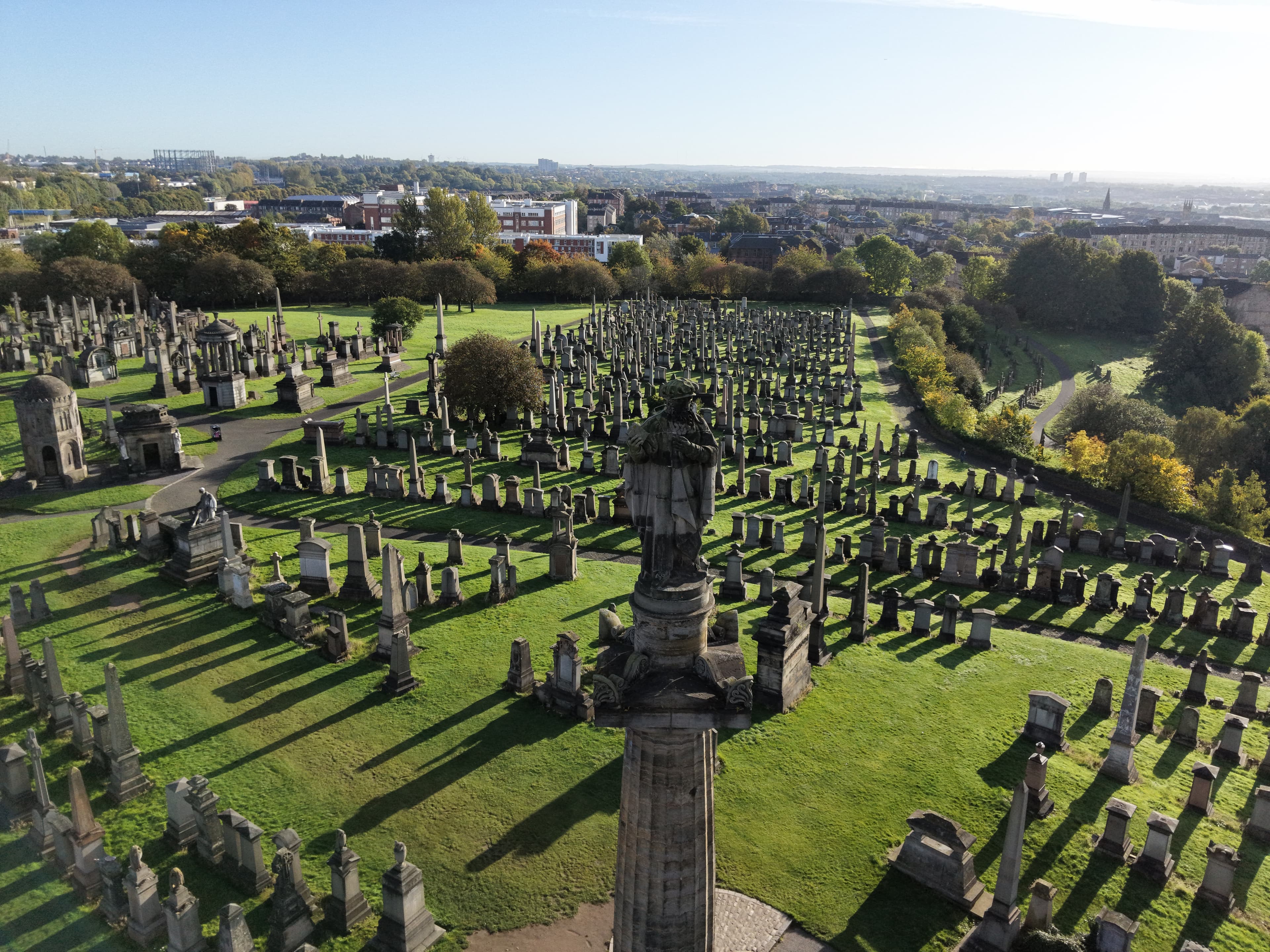
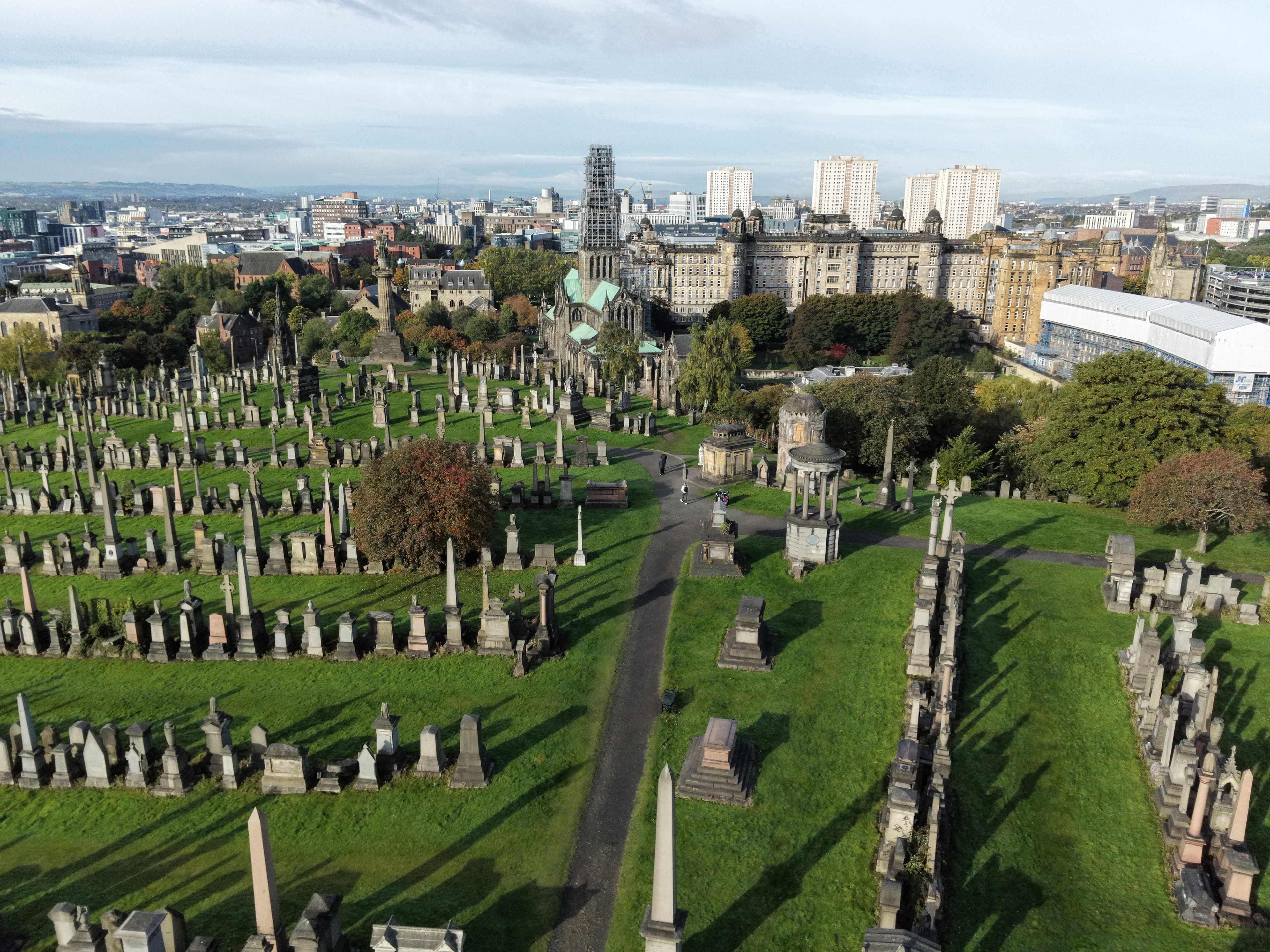
The Necropolis was laid out as one of Scotland’s earliest planned garden cemeteries. Rather than a flat, regular graveyard, it uses the hill’s natural slopes and terraces: paths wind between family lairs, obelisks, columns, mausolea and sculptural monuments. The arrangement was influenced by the new landscaped cemeteries of the period, including Père Lachaise in Paris.
Many of the memorials were commissioned by prosperous merchants, industrialists, professionals and civic figures during Glasgow’s rapid nineteenth-century growth. Together they make the site an important physical record of the people and institutions that shaped the city during that era. Around 50,000 people are buried here, in roughly 3,500 tombs and monuments.
Landmarks and design
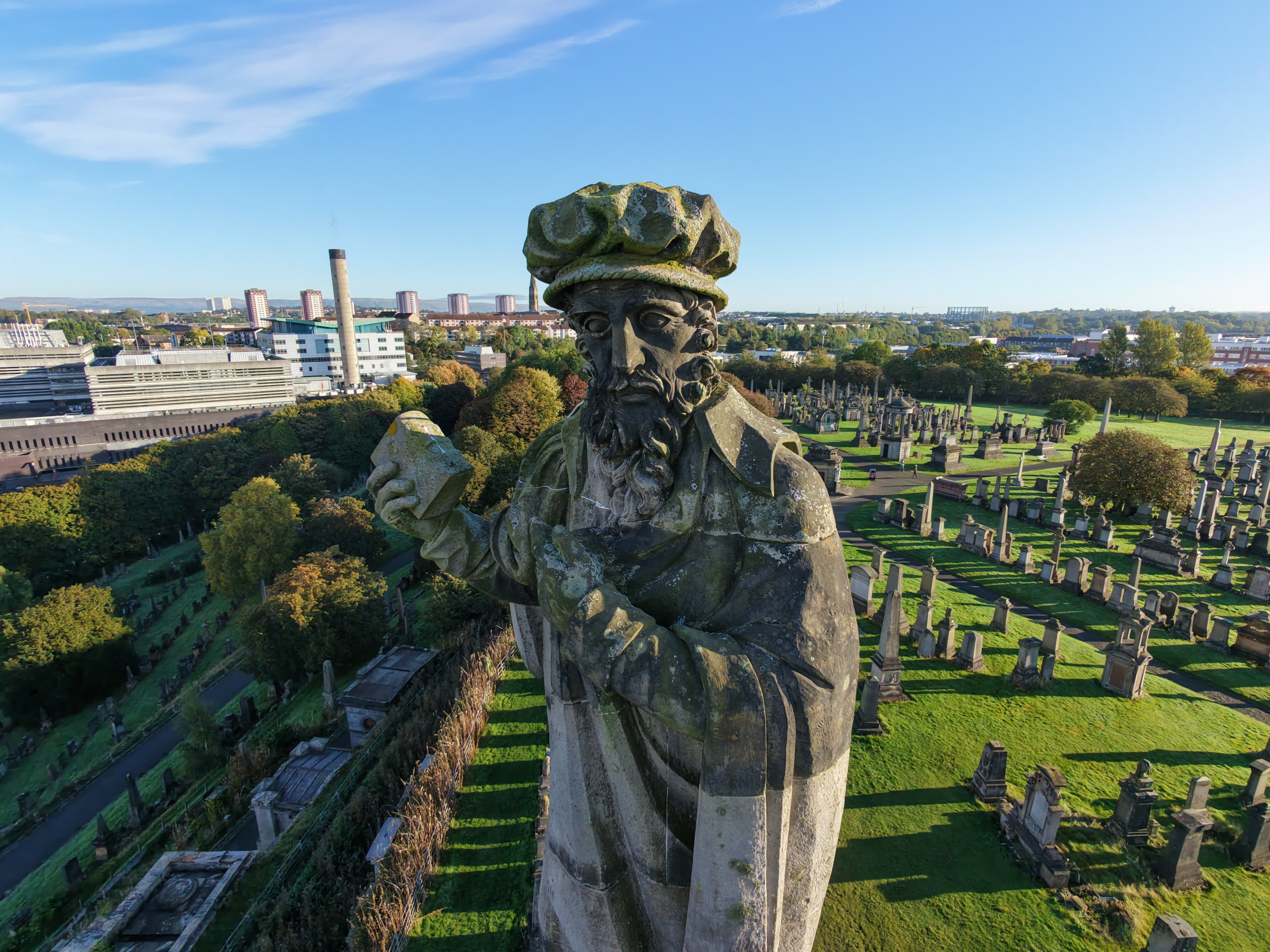
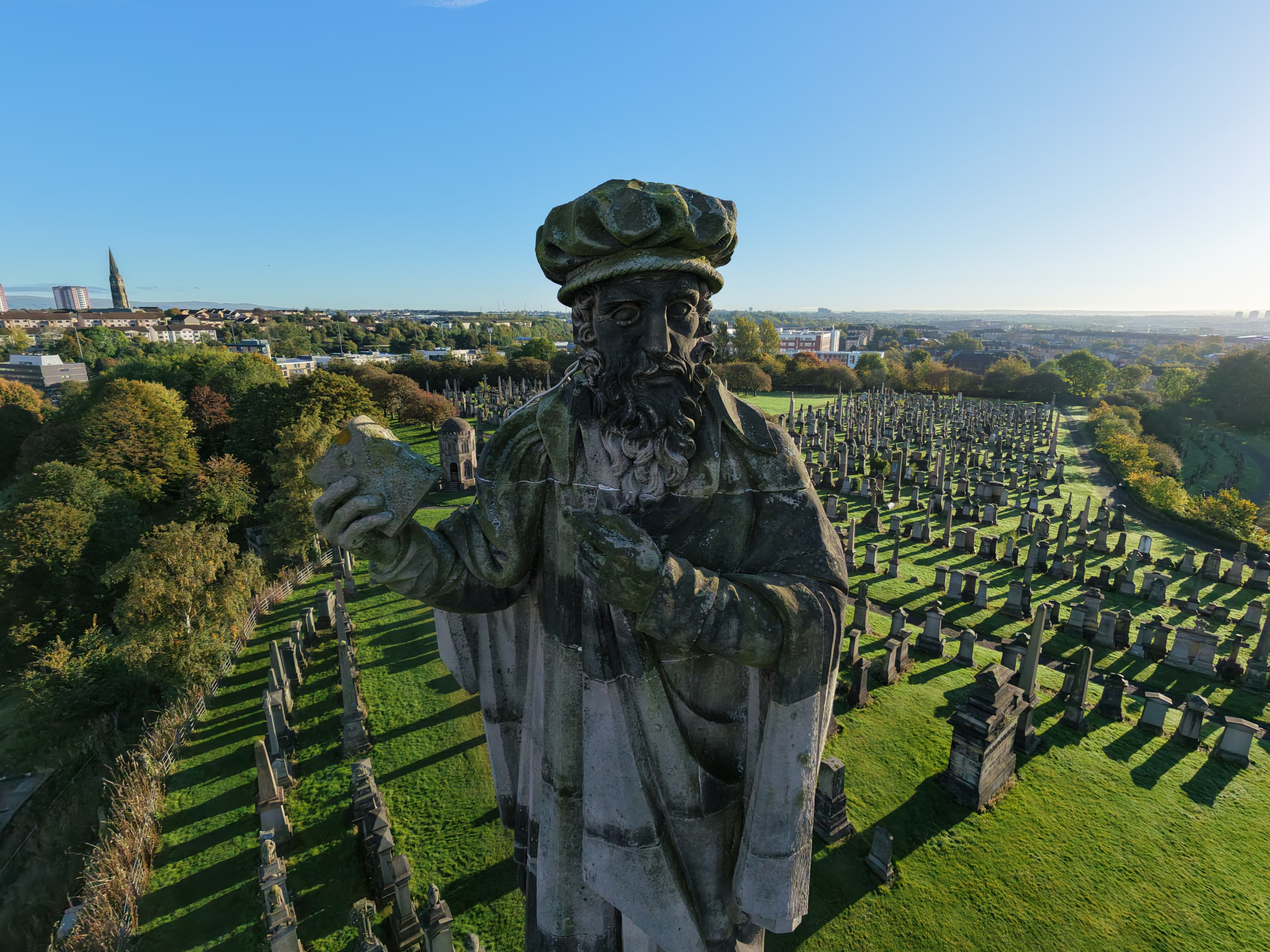
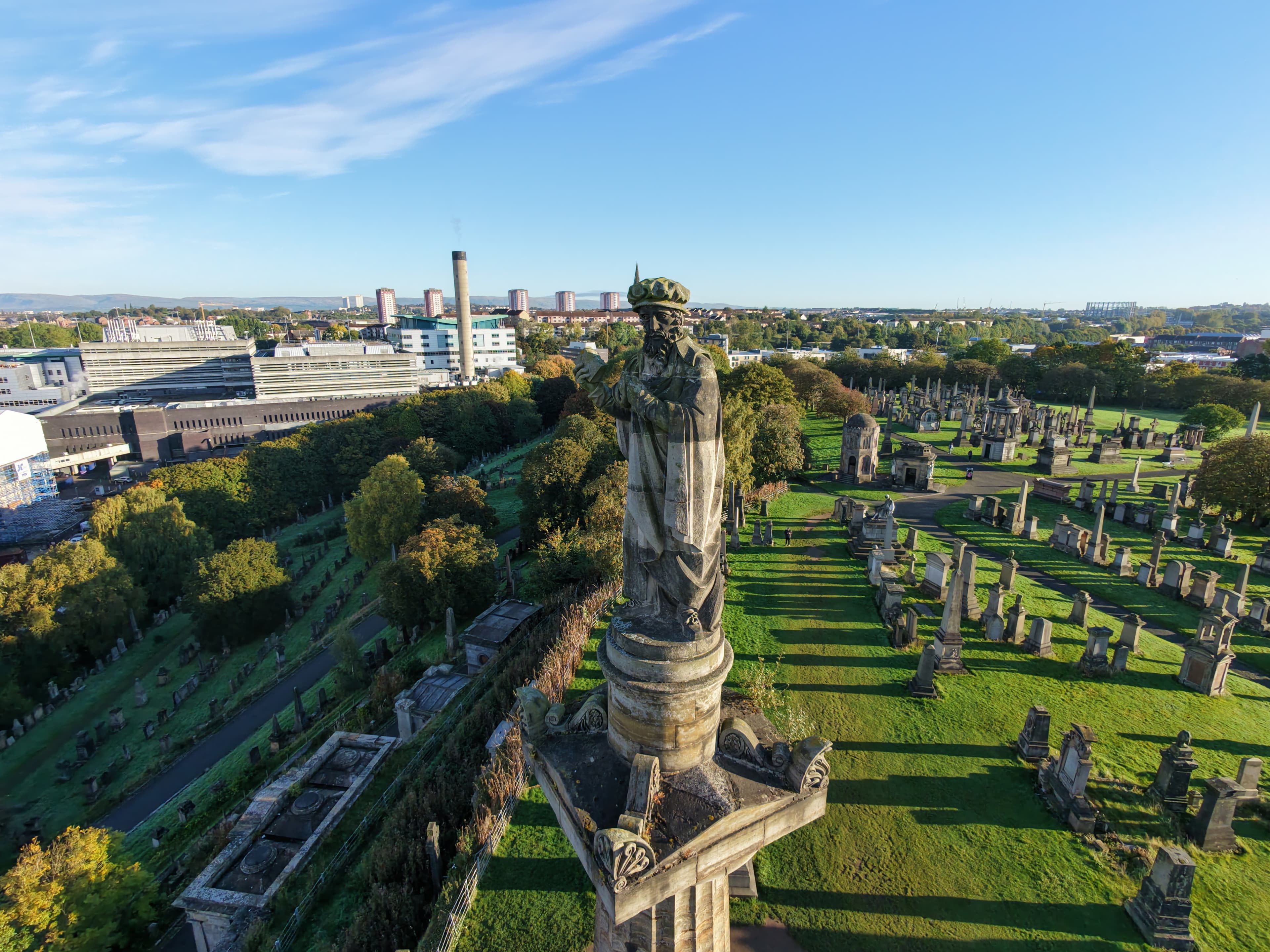
The John Knox Monument, erected in 1825 before the cemetery itself was established, stands near the summit and remains the most conspicuous feature. It was designed by Thomas Hamilton, with sculpture by Robert Forrest. Other monuments include work associated with leading Victorian architects, among them Alexander ‘Greek’ Thomson.
At the south-west side, the Bridge of Sighs crosses Wishart Street and links the Necropolis with the Cathedral area. Despite its romantic name, it is a substantial civic structure of the 1830s, designed as part of the setting for the cemetery rather than as an ancient remnant.
Setting and character
The site covers about 15 hectares and combines formal funerary architecture with grassed slopes, mature trees and open views across central and eastern Glasgow. Its appearance changes noticeably through the seasons: foliage can soften the density of stonework, while winter reveals the hill’s steep form and the varied silhouettes of the monuments more clearly.
It remains, above all, an active historic burial ground and memorial landscape. The scale and variety of its monuments reward slow looking, but the place is best understood not simply as a collection of impressive stonework, but as a shared record of Glasgow’s nineteenth-century life, wealth, belief and loss.
Autumn · 8 October 2026
A Quiet October Morning
A relaxed flight over Glasgow Necropolis on a sunny October morning, with little wind and not too many visitors around the paths and monuments.
Notes from this flight
8 October 2026
Glasgow Necropolis was quiet on this October morning, with not too many visitors about. The sun was out and there was no wind, which made this a relaxed flight from the start.
It was the sort of unhurried visit that suited the place: time to take in the layout of the cemetery and the mix of monuments without feeling rushed. With the calm conditions holding, the flight stayed straightforward and enjoyable.
Above the Necropolis
The Necropolis is a Victorian garden cemetery on the hill above Glasgow Cathedral, known for its dense collection of memorials and monuments. That historic setting gives even a short visit plenty to look at from above.
For this outing, though, the main thing was the quietness. A sunny morning, still air and a relatively empty site made for a simple, relaxed session at one of Glasgow’s most distinctive historic places.
Look around
The flight in 360°
An interactive view from this visit. Click to load it, then drag around the scene.
Necropolis Pano 2
Gallery
Photos from this flight
Location
Roughly where it is
General area
Glasgow Necropolis
55.86287° N · 4.23085° W
The marker shows the general location only, not a take-off point.
Open in Google Maps